(+1) 321-326-4745
(+1) 321-326-4745
Search

Rustic vs Modern Woodworking Styles: Finding Your Perfect Look

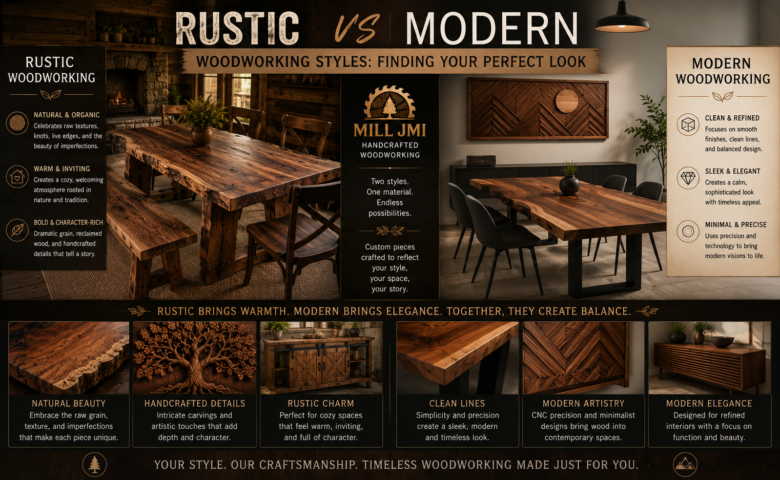
Woodworking has remained timeless because of its ability to evolve with changing design styles while still preserving craftsmanship and natural beauty. Two of the most popular styles in today’s interiors are rustic woodworking and modern woodworking. While both celebrate the beauty of wood, each creates a completely different atmosphere and visual experience within a space.

At MILL JMI, both rustic and modern woodworking styles are approached as forms of artistic expression. Whether creating handcrafted furniture, custom carvings, or decorative wall art, the goal is always the same — to create meaningful pieces that reflect personality, craftsmanship, and timeless design.

Rustic woodworking is deeply connected to nature, warmth, and authenticity. This style often highlights raw textures, bold grain patterns, live edges, knots, and natural imperfections within the wood. Rustic pieces feel organic and grounded, bringing warmth and character into a room. They often create a cozy, welcoming atmosphere that feels connected to tradition and craftsmanship.

Large farmhouse tables, reclaimed wood accents, distressed finishes, and heavily textured carvings are all common elements within rustic woodworking. The beauty of rustic design comes from embracing the natural personality of the wood rather than trying to make it appear perfectly uniform.

Modern woodworking, on the other hand, focuses on clean lines, simplicity, balance, and refined craftsmanship. Modern pieces often feature smooth finishes, geometric shapes, minimalistic details, and sleek integration with metal, glass, or contemporary materials. Rather than emphasizing heavy texture, modern woodworking creates elegance through precision, proportion, and simplicity.

At MILL JMI, modern woodworking often blends handcrafted artistry with advanced CNC carving technology to create detailed designs that feel clean, sophisticated, and timeless. Minimalistic wall carvings, sleek custom furniture, and geometric textures allow wood to fit beautifully into contemporary interiors while still maintaining warmth and natural character.

One of the most interesting aspects of woodworking today is how rustic and modern styles can work together. Many modern rustic interiors combine the warmth of natural wood with clean contemporary design. A live-edge dining table paired with modern lighting, or a detailed wood carving displayed within a minimalist space, creates balance between nature and sophistication.

Choosing between rustic and modern woodworking styles often depends on the feeling someone wants their space to create. Rustic interiors tend to feel warm, earthy, inviting, and connected to nature. Modern interiors often feel calm, refined, elegant, and visually clean. Both styles have timeless appeal because both are rooted in the natural beauty of wood itself.

Wood grain also plays an important role in both aesthetics. Rustic woodworking often highlights dramatic grain movement and natural imperfections, while modern woodworking may focus on smoother grain flow and cleaner finishes. At MILL JMI, wood selection is carefully matched to the overall design vision to ensure every piece complements the intended atmosphere.

Custom woodworking allows homeowners to move beyond trends and create spaces that reflect their personal style. Some people are drawn to the rich textures and handcrafted charm of rustic pieces, while others prefer the sleek simplicity of modern design. Many discover that combining elements of both creates the perfect balance.

At MILL JMI, every handcrafted creation is designed to bring artistry, warmth, and individuality into a space — whether through rustic craftsmanship, modern elegance, or a blend of both. The focus is never simply on furniture or décor, but on creating pieces that feel authentic, timeless, and meaningful.

Because in the end, great woodworking is not defined by trends alone. It is defined by craftsmanship, creativity, and the ability to transform natural wood into art that complements the way people live.
Choosing the Right Wood for Custom Furniture and Carvings

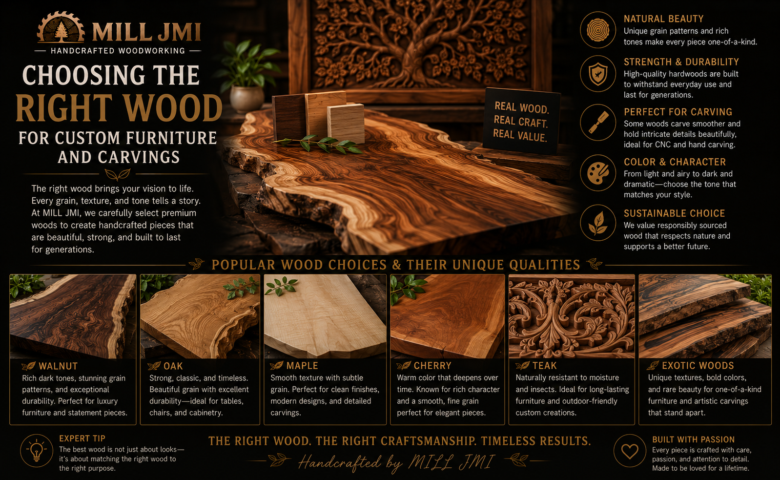
One of the most important parts of creating handcrafted furniture and artistic carvings is choosing the right wood. The type of wood used in a project affects not only its appearance, but also its strength, texture, durability, carving detail, and overall personality. At MILL JMI, wood selection is treated as part of the artistic process itself because every species carries its own natural beauty and character.

No two woods are exactly alike. Some woods feature dramatic grain patterns and rich color variations, while others offer smooth textures and clean, modern finishes. Certain species are ideal for intricate CNC carvings, while others are better suited for large statement furniture pieces. Understanding these differences helps transform a simple project into a timeless handcrafted creation.

One of the most valued qualities in woodworking is grain character. Woods with bold grain movement create dramatic visual impact and often become focal points within a room. Live-edge slabs and richly figured woods bring natural artistry into furniture, making every piece feel unique and organic. At MILL JMI, the natural grain is embraced rather than hidden because it adds depth, warmth, and individuality to every creation.

Durability is another major factor when selecting wood. Furniture designed for everyday use requires strong, stable materials capable of lasting for years. Hardwoods are often preferred for custom furniture because of their density, strength, and long-term performance. These woods resist wear more effectively while aging beautifully over time, developing even more character as the years pass.

For artistic carvings and detailed CNC work, wood texture and carving consistency become extremely important. Some woods carve smoothly and hold intricate detail exceptionally well, making them ideal for relief carvings, decorative wall art, and symbolic designs. Fine grain patterns help preserve detail and create clean carving lines, allowing artwork to feel sharp, dimensional, and refined.

Color tone also plays a major role in woodworking design. Dark woods create richness, luxury, and dramatic contrast, while lighter woods offer warmth, openness, and a modern natural feel. The right tone can completely change the atmosphere of a space, helping furniture and carvings blend naturally into different interior styles.

At MILL JMI, every project is approached individually, and wood selection is carefully matched to the purpose and artistic vision behind the design. A custom dining table may call for bold dramatic grain patterns and strong durability, while a symbolic wall carving may require wood capable of capturing intricate textures and fine artistic detail.

Another important aspect of choosing quality wood is sustainability and authenticity. Real wood carries natural imperfections, knots, tonal changes, and texture variations that give handcrafted pieces their soul. These organic details are not flaws — they are part of what makes handcrafted woodworking feel alive and authentic.

The finish applied to the wood also influences the final appearance. Oils, stains, matte finishes, and protective coatings can either enhance natural grain patterns or create more dramatic artistic effects. At MILL JMI, finishes are selected carefully to preserve the natural beauty of the wood while adding protection and depth to the final piece.

Wood selection is about more than strength or appearance — it is about creating harmony between craftsmanship, function, and artistry. The right wood allows a project to fully express its intended personality and purpose.

In a world filled with synthetic materials and mass-produced furniture, real wood continues to stand apart because of its authenticity, beauty, and timeless character. Every grain line, texture, and natural variation tells a story shaped by nature over time.

At MILL JMI, woodworking begins with respecting the material itself. Through thoughtful wood selection, artistic design, and handcrafted precision, every piece is created to showcase the natural beauty hidden within the wood — transforming raw material into meaningful craftsmanship designed to last for generations.

From Raw Wood to Finished Art: The MILL JMI Creative Process

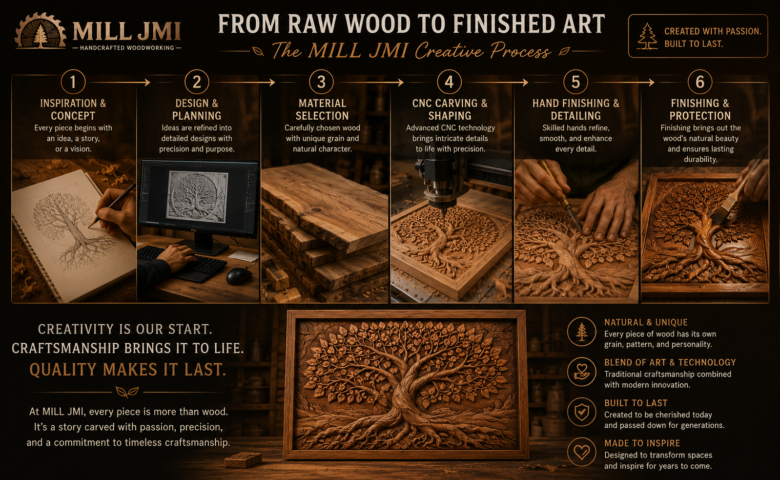
Every handcrafted piece begins long before the carving starts or the finish is applied. Behind every custom furniture design, decorative carving, and artistic wood creation at MILL JMI is a creative process built on imagination, craftsmanship, patience, and precision. What may begin as a simple idea eventually becomes a meaningful piece of functional art — shaped through careful design and dedication at every stage.

At MILL JMI, the creative process starts with inspiration. Sometimes that inspiration comes from nature, symbolism, architecture, modern design, or even personal experiences and emotions. Other times, it begins with a customer’s vision — an idea for a custom table, a meaningful wall carving, or a one-of-a-kind furniture piece designed specifically for their home or space. Every project begins with the same goal: to create something unique, artistic, and lasting.

Once the concept is developed, the design phase begins. Sketches, digital renderings, measurements, and layout planning all help transform ideas into workable designs. This stage is where creativity and structure meet. Attention is given to proportions, textures, dimensions, carving depth, grain direction, and overall visual balance to ensure the final piece feels both functional and visually striking.

Material selection is another important part of the process. At MILL JMI, wood is more than a building material — it is part of the artwork itself. Every slab and board carries its own grain patterns, textures, knots, and natural character. Choosing the right wood helps define the personality of the finished piece. Instead of hiding natural imperfections, MILL JMI embraces them, allowing the organic beauty of the material to become part of the final design.

Once the design and materials are prepared, the carving and shaping process begins. Modern CNC carving technology allows intricate details, textures, and artistic elements to be brought to life with incredible precision. Detailed relief carvings, custom engravings, layered designs, and decorative patterns are carefully carved into the wood, transforming flat surfaces into dimensional artwork.

But technology is only part of the story. After the CNC carving is complete, the handcrafted finishing process begins — the stage where the piece truly comes to life. Sanding, refining edges, smoothing textures, hand detailing, staining, and finishing are all done with careful attention to detail. These finishing touches add warmth, depth, and personality that machines alone cannot create.

At this stage, every piece starts developing its own identity. The natural grain becomes more visible, textures gain richness, and carved details begin to stand out with depth and character. Lighting, stain color, and finish selection all play a role in highlighting the artistic qualities of the wood.

Quality and craftsmanship remain central throughout the entire process. Every detail is inspected to ensure the finished work reflects the standards and vision behind the MILL JMI name. The goal is not simply to build furniture or décor, but to create something meaningful, durable, and visually memorable.

What makes the MILL JMI creative process unique is the balance between innovation and craftsmanship. Traditional woodworking techniques work alongside modern CNC technology to create pieces that feel both timeless and contemporary. This blend allows for precision while preserving the authenticity and artistic soul of handcrafted woodworking.

From raw wood to finished art, every creation at MILL JMI carries a story of creativity, patience, and craftsmanship. Each project is shaped not only by tools and technology, but by artistic vision and passion for the craft itself.

Because at MILL JMI, woodworking is more than a process — it is the transformation of natural materials into lasting works of art.

The Art of CNC Wood Carving: Where Technology Meets Creativity

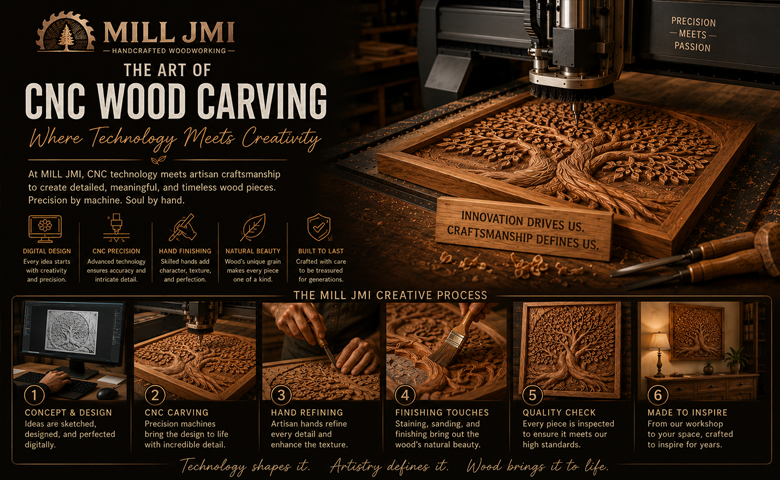
Woodworking has always been a craft rooted in patience, skill, and creativity. For generations, artisans shaped wood by hand, transforming raw materials into furniture, carvings, and meaningful works of art. Today, modern technology has introduced new tools into the craft, but true artistry still remains at the heart of the process. At MILL JMI, CNC wood carving represents the perfect balance between precision technology and handcrafted creativity.

CNC, which stands for Computer Numerical Control, allows woodworking designs to be carved with incredible accuracy and detail. Using advanced software and precision machinery, intricate patterns, textures, and artistic concepts can be brought to life directly into wood. From decorative wall art and custom signage to detailed relief carvings and furniture accents, CNC technology opens creative possibilities that were once difficult or impossible to achieve consistently by hand alone.

However, CNC woodworking is far more than simply pressing a button on a machine. Behind every carving is a creative process that begins with imagination, design, and artistic vision. Every project starts with an idea — a concept sketched, designed, and carefully prepared before the carving process ever begins. The machine becomes a tool that helps transform that vision into reality, but the creativity behind the work always comes from the artist.

At MILL JMI, CNC carving is used not to replace craftsmanship, but to enhance it. Technology provides precision, while handcrafted finishing adds warmth, character, and individuality to every piece. After the carving is complete, the work still goes through detailed sanding, refining, staining, and finishing by hand. These finishing touches are what give each project its personality and bring the wood to life.

One of the most exciting aspects of CNC wood carving is the level of detail it allows. Intricate textures, layered dimensions, symbolic artwork, and realistic relief carvings can all be created with stunning accuracy. This opens the door for highly customized creations that reflect personal meaning, artistic expression, and unique design styles. Whether it is a symbolic frog carving representing a leap of faith or a large decorative wall piece designed to transform a room, CNC technology allows creativity to move beyond traditional limits.

CNC woodworking also creates new opportunities for modern furniture design. Clean lines, custom engravings, geometric patterns, and artistic textures can be seamlessly integrated into tables, wall décor, cabinetry, and statement pieces. This combination of artistry and innovation allows handcrafted woodworking to evolve while still maintaining its connection to natural materials and traditional craftsmanship.

Despite the advanced technology involved, wood itself remains the soul of the process. Every board carries unique grain patterns, textures, and imperfections that cannot be duplicated. CNC carving works alongside these natural characteristics rather than removing them, allowing every piece to remain organic, authentic, and one of a kind.

At its core, CNC woodworking is not about replacing craftsmanship with machines — it is about expanding creative possibilities. It allows artists and woodworkers to push boundaries, experiment with new ideas, and create detailed works that blend timeless craftsmanship with modern innovation.

At MILL JMI, every CNC carving is created with the belief that woodworking should inspire, tell stories, and leave lasting impressions. By combining technology with artistic craftsmanship, MILL JMI continues to create custom woodwork that feels both modern and timeless — where precision meets creativity in every detail.

Back to Top
Product has been added to your cart
Compare (0)